The eye follows contrast
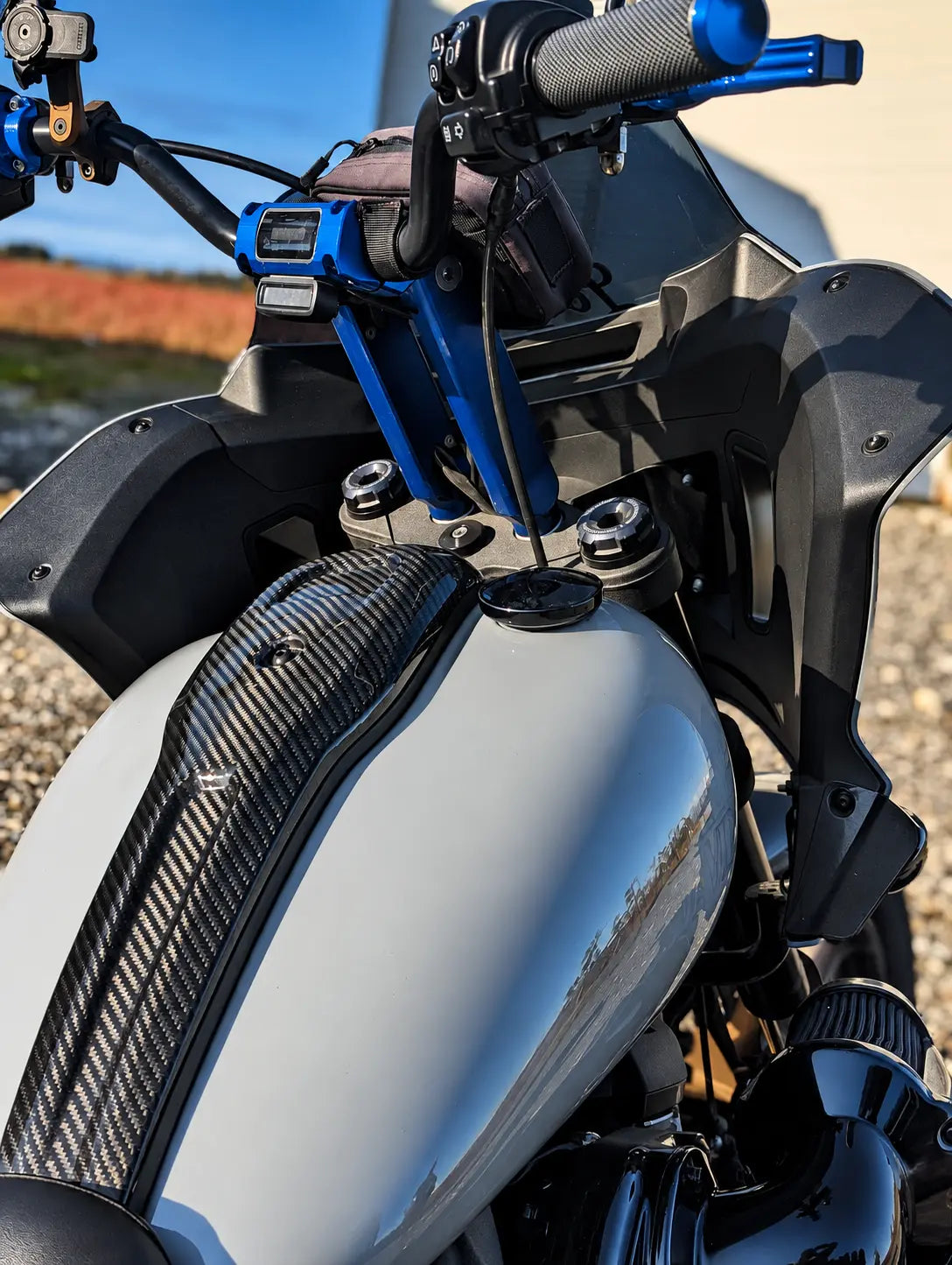
Carbon is not simply another shade of black. The visible pattern and the way its surface reflects light can make it stand out beside paint, rubber, metal and the seat. Even a small component can draw attention when the surrounding surfaces are quiet.
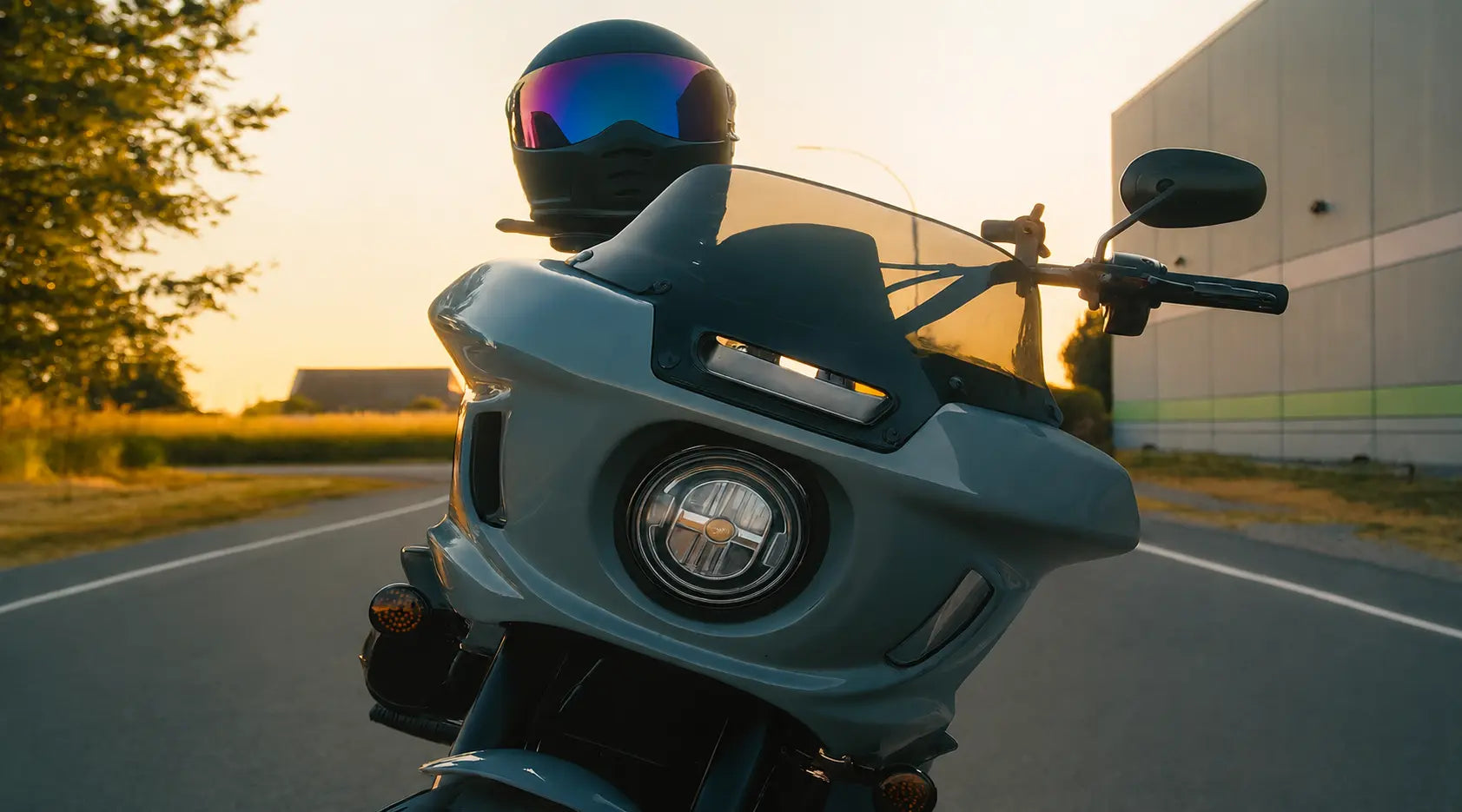
This is why the best question is often where to place carbon, rather than how much to add. On a mostly painted Harley-Davidson Low Rider, one carefully positioned detail may provide enough contrast. On a build with several exposed materials, another texture needs a clearer role to avoid competing with everything already there.
Large surfaces and small details do different jobs
A front fender frames the front wheel and is visible in the motorcycle’s outline. A rear fender influences the shape around the seat and tail. These panels have a role in the whole-bike view before the viewer is close enough to study the pattern.
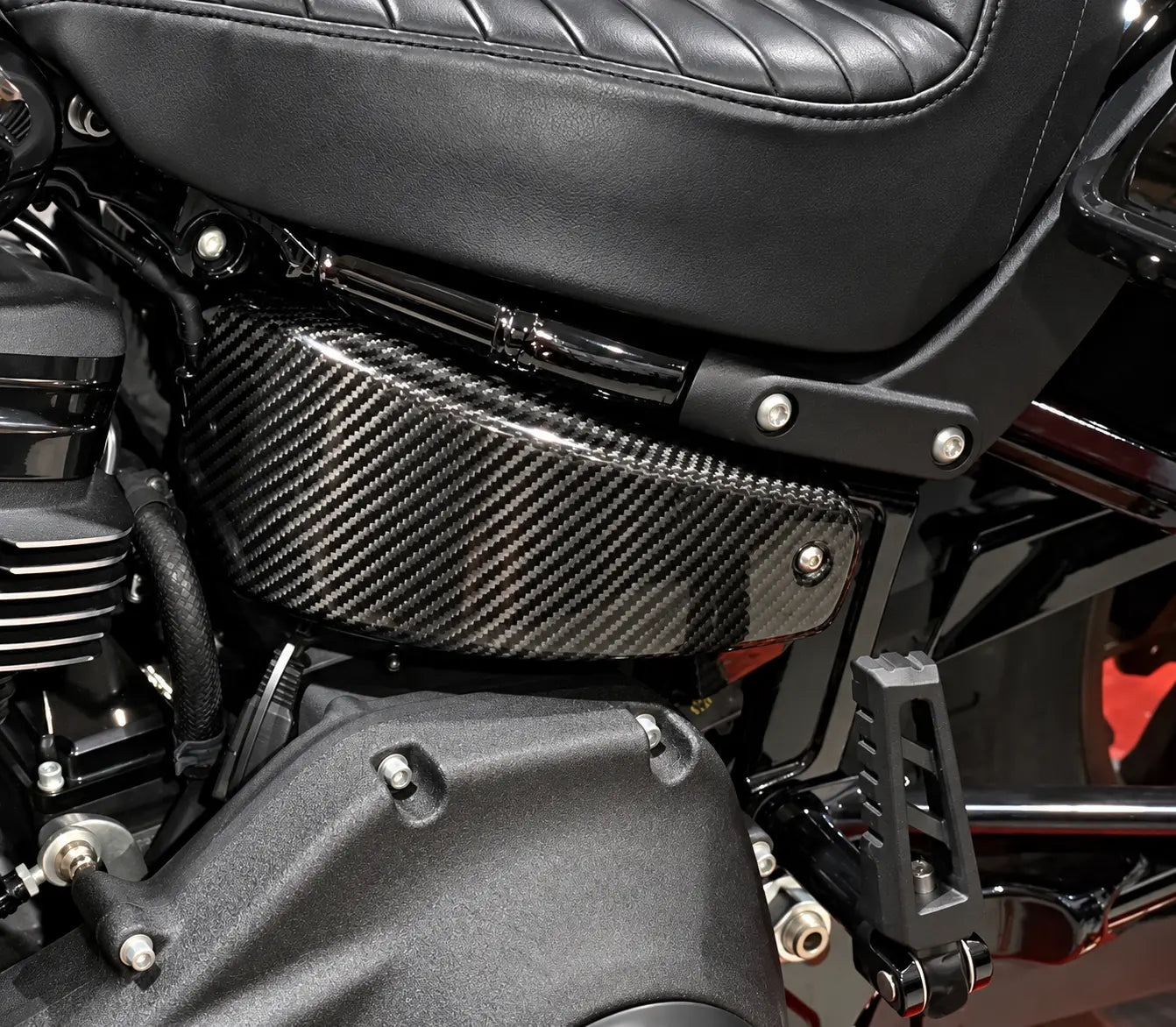
A tank centre cover is a more personal detail because it sits near the rider’s normal line of sight. A battery cover adds texture below the seat and can connect neighbouring areas. Smaller parts are not necessarily less important; they simply work at a different viewing distance.
Repeat a detail, then leave a gap
Repeating carbon in more than one area can establish a theme. The painted and mechanical surfaces between those areas are part of that theme too. They give the eye a pause and allow the separate pieces to read as intentional accents.
There is no required number of carbon components for a finished motorcycle. If a new part makes the middle feel busy or draws attention away from a feature you prefer, leaving the existing surface alone may be the better decision. A complete appearance comes from the relationship between pieces, not from filling every available position.
Pattern scale changes the impression
A fine directional repeat and a larger geometric pattern can look very different across the same panel. On a narrow strip, only part of a repeat may be visible; on a broad fender, the repetition becomes a stronger feature. Compare both a close-up and a whole-component view before imagining it on the bike.
Mixing patterns can work, but give each one a reason to be there. If you want a restrained result, using one pattern consistently is easier to coordinate. Read twill versus honeycomb for the distinction between visual pattern and actual construction.
Watch reflections move across the shape
Gloss can accentuate curved bodywork through bright highlights; matte produces a quieter reflection. The same part may seem prominent in direct light and almost disappear into the motorcycle in shade. That changing appearance is worth evaluating before making a decision from one dramatic image.
Compare the motorcycle outdoors in soft daylight, in brighter light and in the garage where you normally see it. Keep the camera angle similar. Your aim is to recognise a consistent design relationship, not to make every photograph display an identical shade of carbon.
Use a simple full-bike test
- Take a side view and a front three-quarter view with your normal equipment fitted.
- Look at each image without zooming in and identify the first area you notice.
- Check whether that is the area you intended to emphasise.
- Move closer and compare the pattern and sheen of neighbouring components.
- Remove one proposed addition from the plan and see whether the composition becomes clearer.
The featured Carbon Syndicate build is a useful reference for repeating the material through several areas. Use it to consider placement rather than to assume fitment or engineering performance. Photographs can illustrate the design; they cannot establish the specifications hidden behind the surface.
Will carbon automatically make a bike look lighter?
There is no guaranteed visual effect. A dark reflective panel can appear more prominent or more subdued depending on the surrounding surfaces and light. Actual weight is a separate, measurable product specification.
When you are ready to turn the visual idea into a parts list, use the complete-build guide and check each component’s compatibility individually.