Two ways to handle light
Gloss and matte describe the surface, not the carbon pattern beneath it. Gloss makes bright reflections easy to see. Matte reduces that mirror-like effect, although it still changes appearance with viewing angle and light. Neither label guarantees an exact match between products from different ranges.
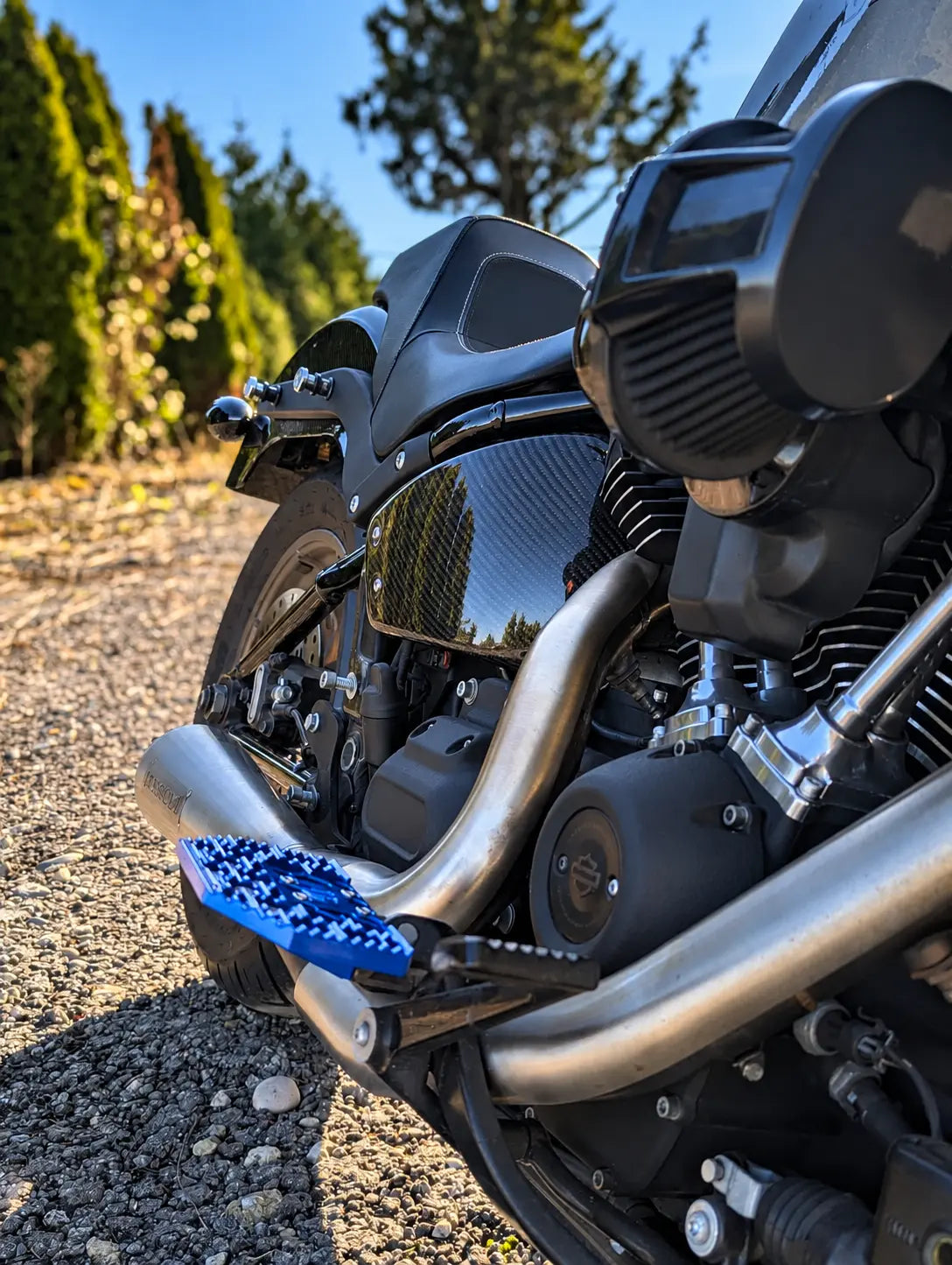
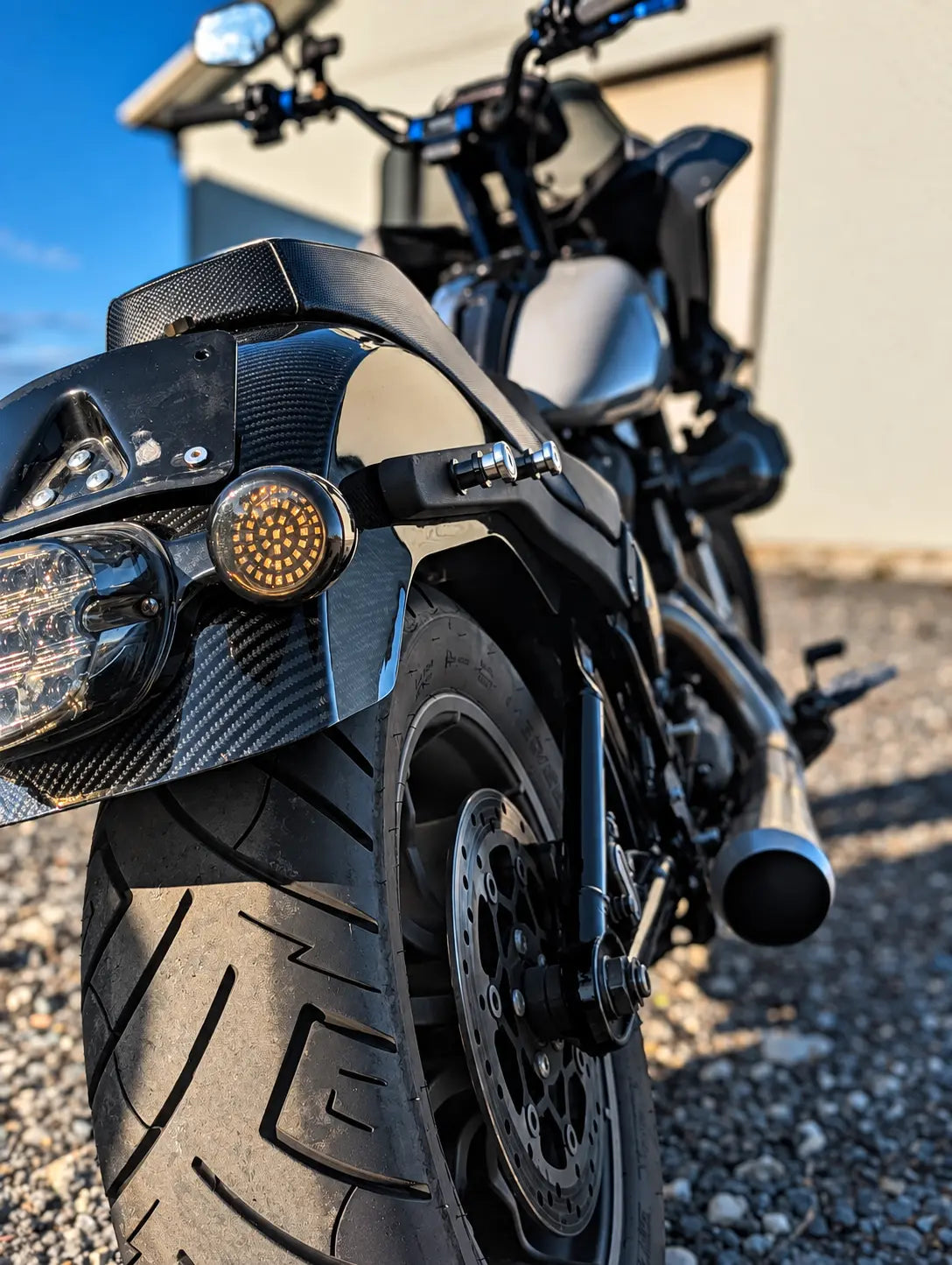
On a curved fender, gloss can make the shape read strongly: a bright edge rolls into a darker area as you move around the bike. That can accentuate both the panel’s form and the visible carbon. Matte gives a less reflective impression, which may work well when you want the shape to stay quiet beside other details.
Compare with the paint you already have
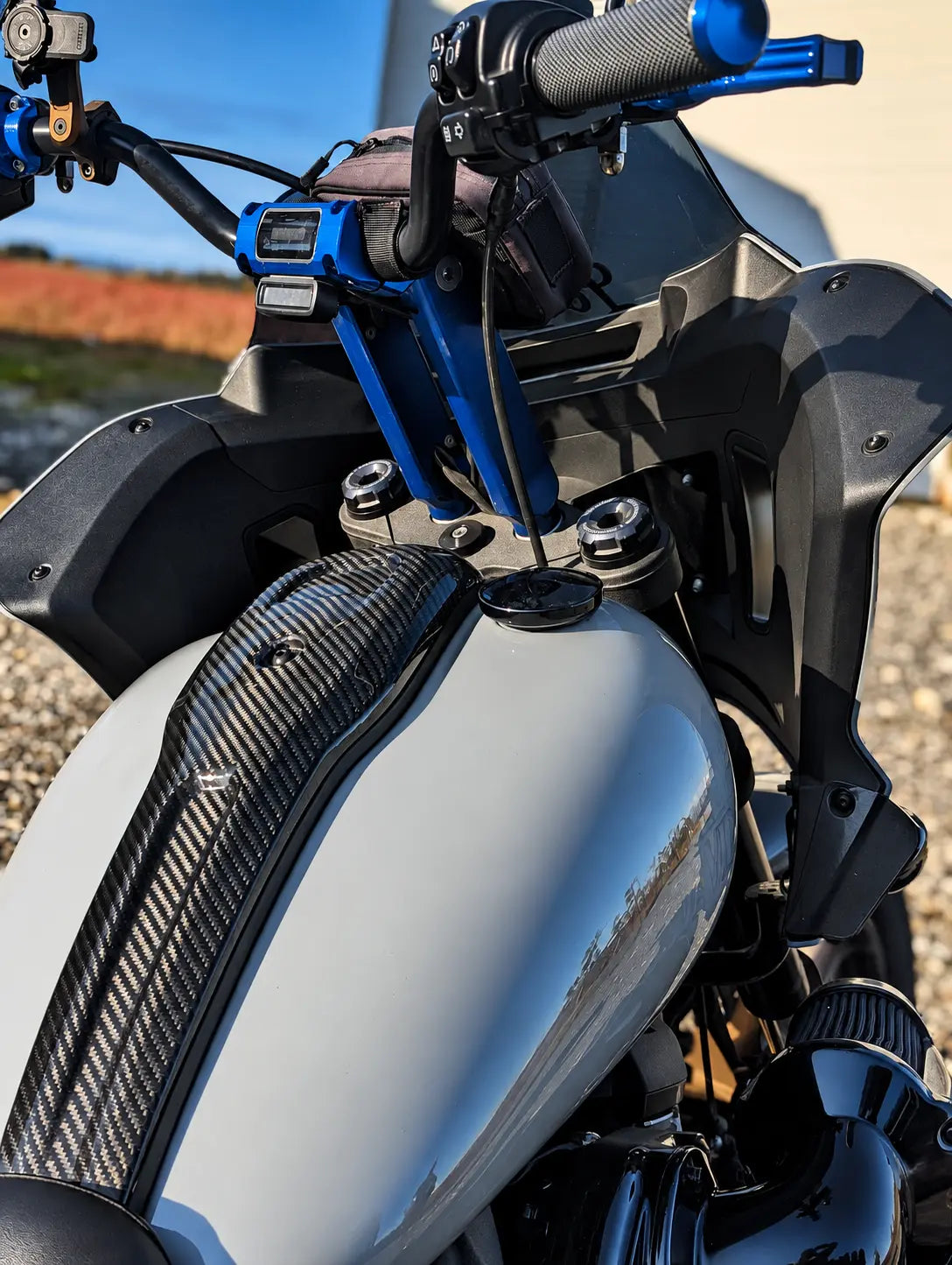
Start beside the motorcycle rather than with an isolated product image. Gloss carbon next to glossy paint can create a continuous reflective finish even when the patterns differ. Beside a low-sheen tank, it creates contrast. Matte carbon beside gloss paint can work as a deliberate accent, but it will not necessarily look like an extension of the painted panel.
“Black” is not one consistent appearance across carbon, paint, powder coating and plastic. Reflections can make carbon look silver or grey in one photograph and nearly black in another. Compare in daylight and in the garage, with the parts positioned roughly as they will sit on the motorcycle.
Keep pattern separate from sheen
A glossy twill and a glossy honeycomb-style surface share a sheen but have different visual rhythms. Two twill components can share a repeat yet look disconnected if one is glossy and the other matte. Write down both choices when planning a set: pattern, approximate scale, direction and finish.
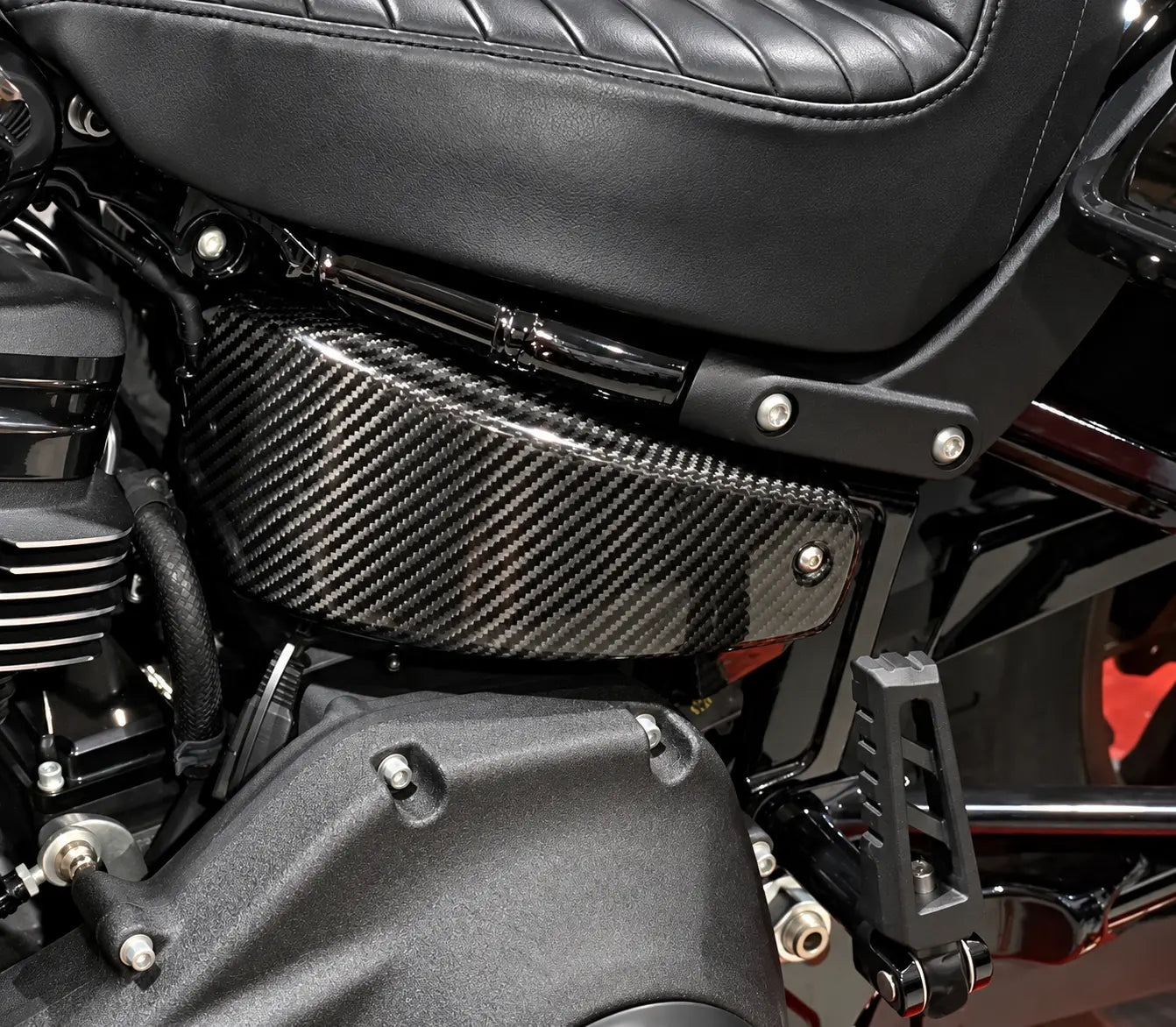
For a Harley-Davidson Low Rider, look especially at how the tank centre cover relates to the surrounding tank and how the battery-cover area sits against the seat and side of the bike. These are close-view details, so differences in sheen can be more apparent than they are in a whole-bike photograph.
What everyday marks look like
A reflective surface can make fine marks and fingerprints noticeable under a strong light. A matte surface may show handling marks or areas that have become shinier through rubbing. That does not make either finish maintenance-free or inherently more durable. Durability depends on the actual surface system, how the part is used and how it is maintained.
Before choosing, think about the areas you regularly touch or brush with clothing, where luggage might rub, and how you clean the bike. Ask about the specific coating rather than assuming that every product marketed as matte or gloss behaves identically.
Care can change the appearance
Do not use an abrasive polish to make a matte panel “cleaner”; you may change the sheen locally. Equally, a glossy carbon surface is not automatic permission to machine-polish it. Use a coating-compatible method and get advice before applying compounds, solvents or protective treatments.
Harley-Davidson distinguishes low-sheen finishes from gloss in its own motorcycle washing guidance. That is a useful reminder to treat each surface appropriately, not an approval of a particular cleaner for an aftermarket carbon component.
A practical selection process
- Confirm that the actual part suits your motorcycle and setup.
- Choose the pattern you want to repeat through the build.
- Compare available finishes with the bike in similar lighting.
- Check a close-up and an installed view, not just a finish label.
- Confirm the care method before ordering.
Does matte carbon mean a different construction?
No construction conclusion follows from the sheen alone. Ask for the material and manufacturing specification separately if that information affects your purchase.
Do all carbon parts need the same finish?
No. A coherent build can use contrast. Repeat the contrast deliberately rather than allowing an accidental mismatch to determine the result. Our visual-balance guide explains how to evaluate that choice.