Write a short build brief
Before choosing a complete group of parts, describe the result you want in a sentence. It might be a mostly painted motorcycle with a few connected carbon details, or a stronger carbon theme around the front and rear. A clear brief helps you decide which attractive parts belong on this particular build.
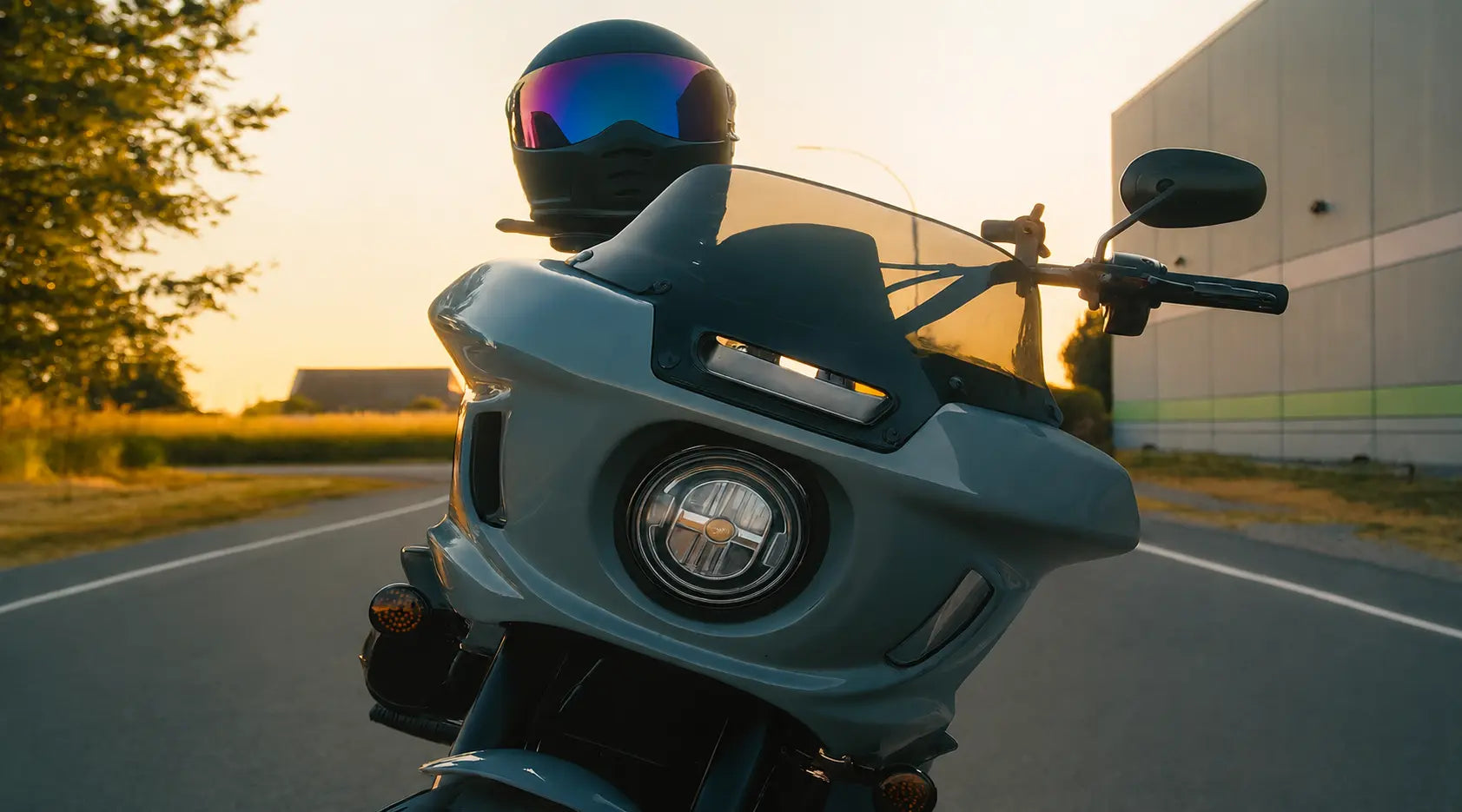
Include the equipment you will actually use. A Harley-Davidson Low Rider photographed without luggage may have a different visual balance when bags, passenger equipment or a different seat are fitted. Plan around your riding setup rather than a temporary arrangement that only works for one photograph.
Map the four component areas
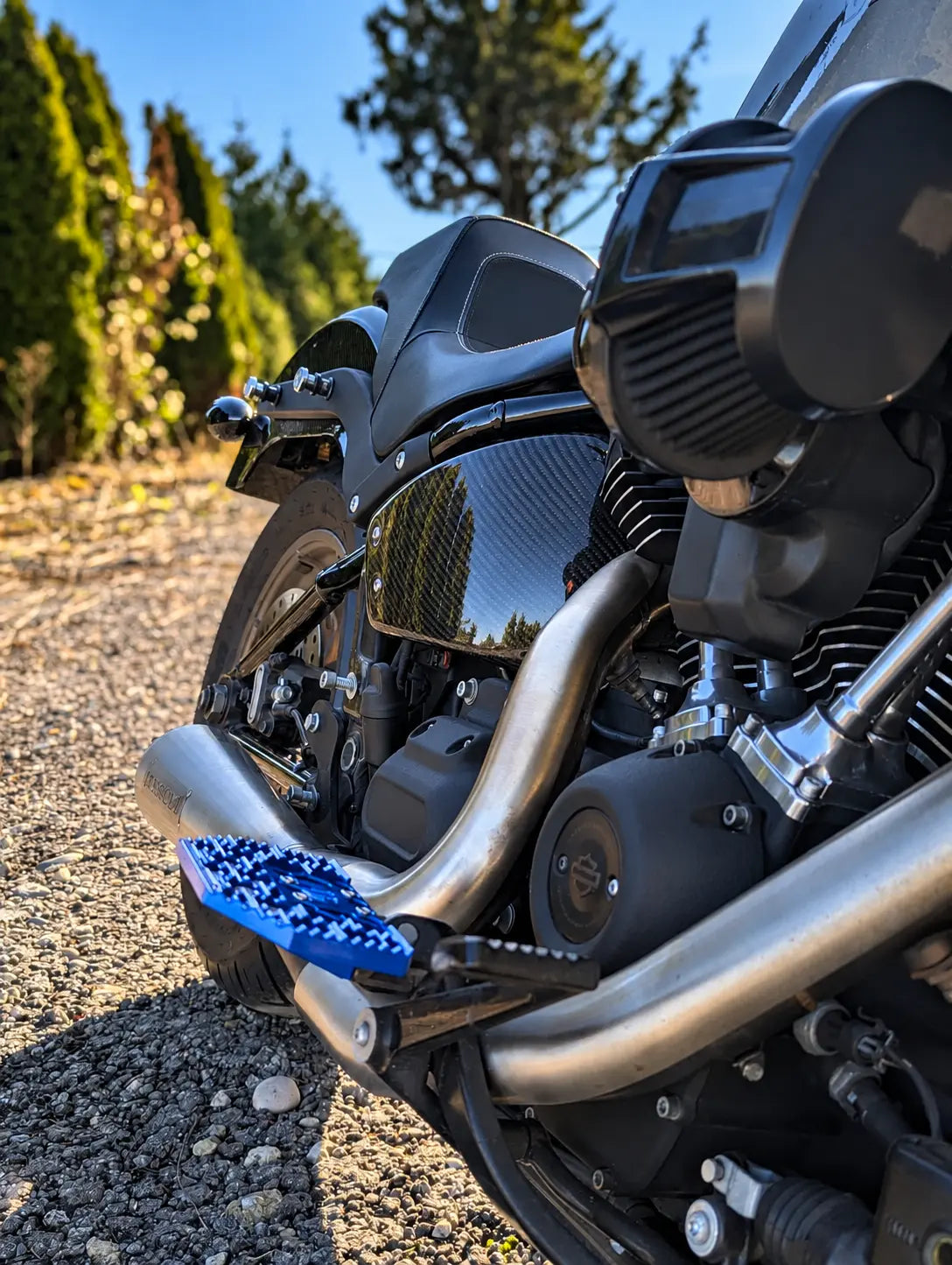
Use a full-bike side photograph and mark the front fender, tank centre cover, battery-cover area and rear fender. Then add a front three-quarter view. A part that feels balanced from the side may become the dominant detail from the front.
Look for a relationship between the areas, not equal amounts of carbon in each. A broad rear panel and a narrow tank detail do different jobs. Paint, the seat and mechanical components can separate the carbon and give each piece room to read clearly.
Choose a pattern and a sheen
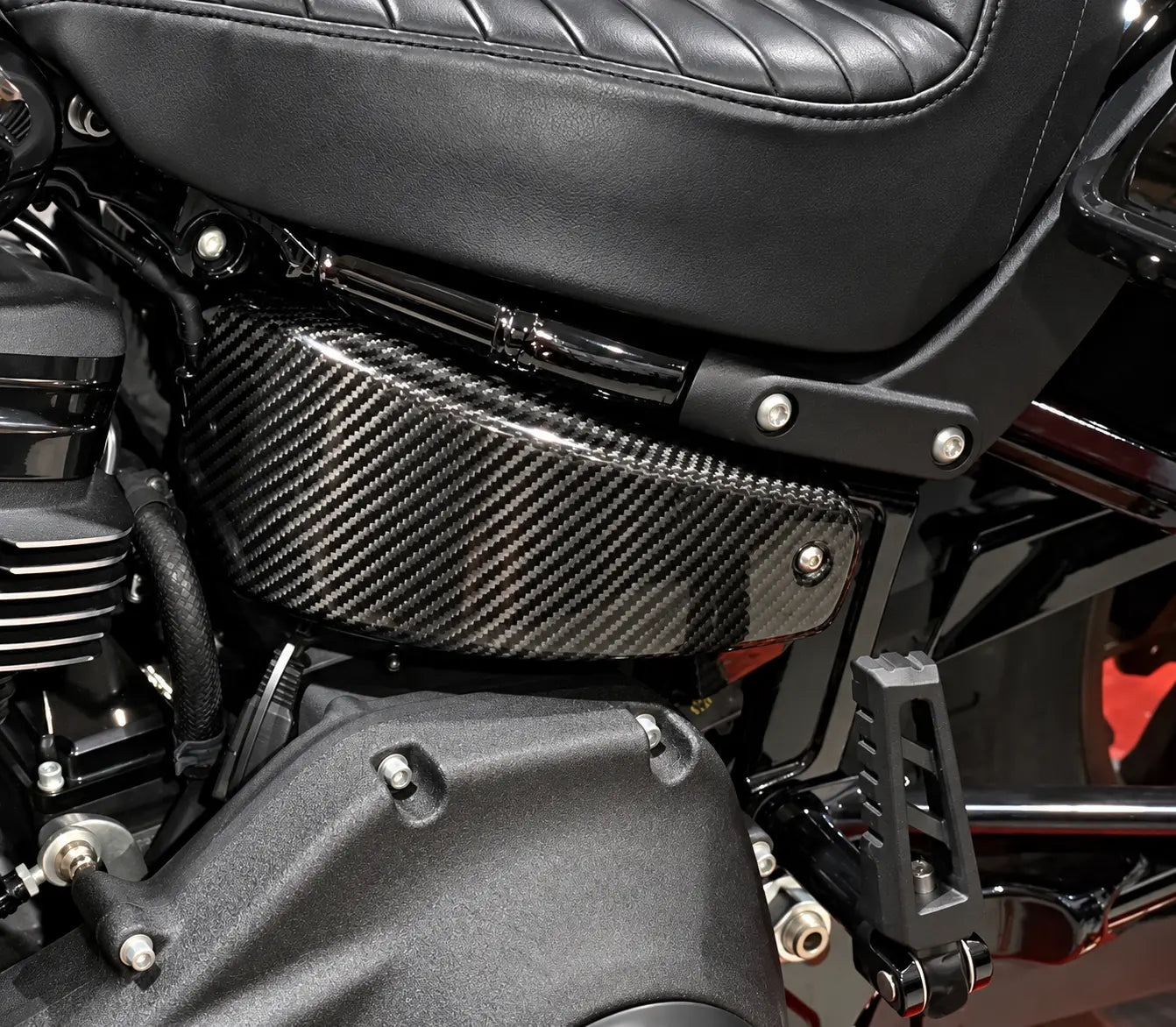
Record the visible pattern and surface finish separately. A diagonal twill has a different rhythm from a honeycomb-style repeat; gloss has a different reflection from matte. Compare the actual proposed pieces instead of relying on a shared finish name.
If you are matching an existing part, use it as the reference. Request photographs in comparable light and check pattern scale, direction and overall colour. A close-up can reveal a mismatch that disappears in a distant image, while a full-bike view reveals whether the mismatch is important to the overall design. Read twill versus honeycomb before deciding.
Keep a separate fitment record
Make one entry for each component. Record the specific product, motorcycle model/year, relevant modifications, installation method, supplied hardware and any parts to reuse. Mark unanswered questions clearly in your own notes. Do not carry a compatibility answer for a front fender across to a rear panel simply because they appear in the same photograph.
The featured build illustrates how the material can be repeated through a motorcycle. It is styling reference, not a promise that every displayed part will fit every Low Rider S or ST. Use the fitment enquiry form for your exact setup.
Sequence the work sensibly
Start with the area that matters most to the brief. Coordinate jobs that share access or surrounding trim with your installer, rather than assuming all bodywork changes can be completed independently. Confirm any installation dependencies before ordering so a small missing fitting piece does not interrupt the job.
Budget using the exact selected options and the full order costs. A displayed starting price does not establish the price of every pattern or finish. Allow separately for any required installation work; no universal labour estimate can be inferred from a product photograph.
Review at three distances
- Across the street: does the motorcycle’s silhouette still read clearly?
- A few steps away: do the carbon areas feel connected by placement and finish?
- Close up: do the pattern, edges and surrounding details work together?
Repeat those views in ordinary daylight as well as the lighting you use for photographs. A build should be satisfying outside a perfectly lit garage. If one area feels busy, first consider whether the surrounding accessories or finish differences are causing it, rather than immediately adding another carbon component.
Do I need to buy all the parts at once?
No. Planning the group first can help even when you buy in stages. Keep the finish reference and the build brief, then reassess the motorcycle after each change.
Is a matching appearance proof of matching construction?
No. Visual coordination and engineering specification are different questions. Seek product-specific information for fitment, construction and any performance claim.