Look beyond the profile
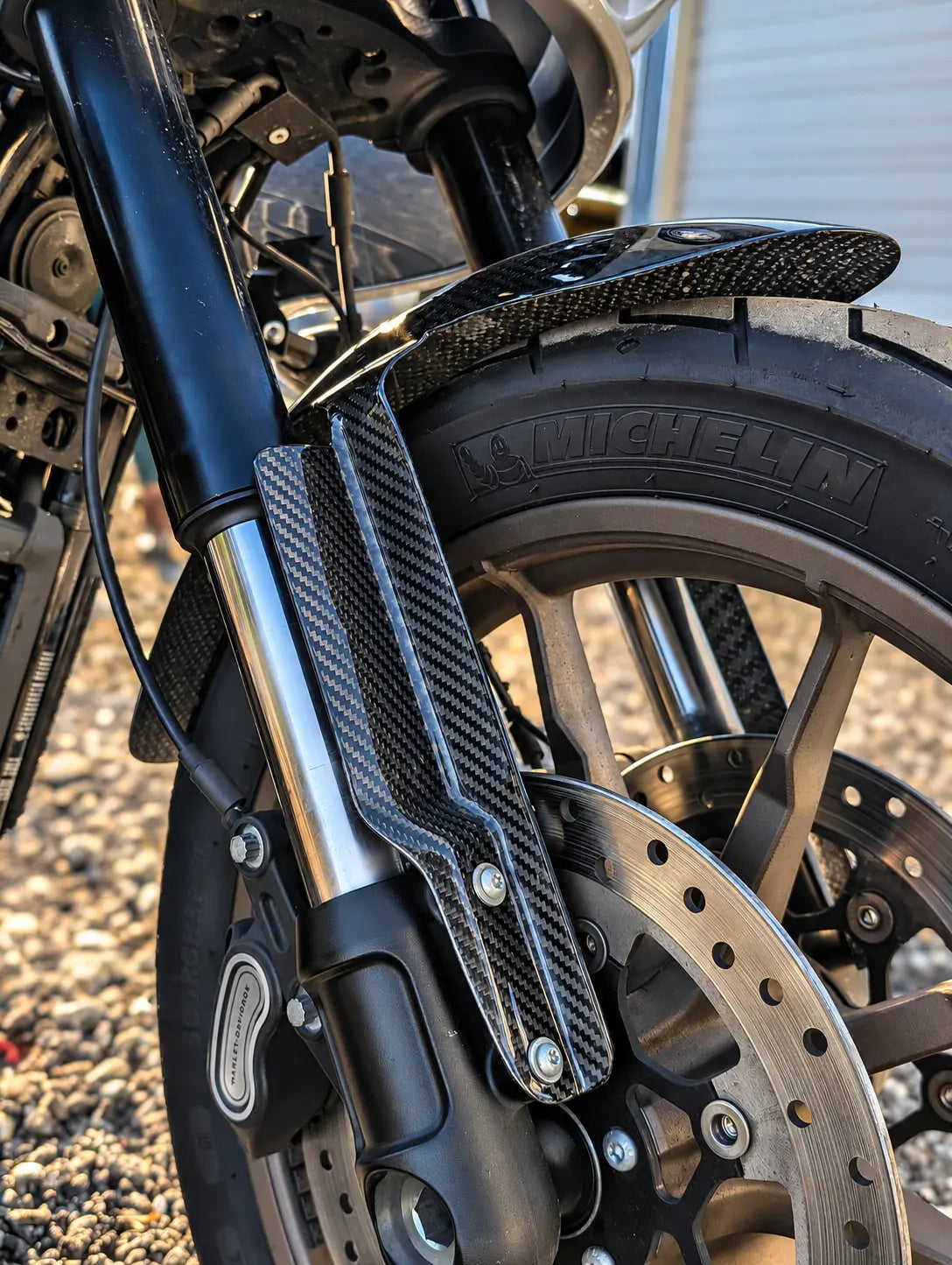
The front fender is one of the first carbon parts you notice on a motorcycle. Its arc sits close to the tire and helps define the front end. That makes it an effective styling change, but also a part whose shape, mounting and clearances need to suit the actual motorcycle.
Begin with the exact year and model of your Harley-Davidson. Add the product name to your notes rather than asking whether “a carbon fender” fits. The Carbon Syndicate front-fender page shows the component and its visual role; it should be considered alongside a product-specific compatibility answer.
Record the wheel and tire combination
Write down the wheel diameter and the complete size marked on the tire. Note whether either differs from the motorcycle’s original equipment. Tire descriptions such as wide, low-profile or stock-looking are not precise enough to compare a part with an installation specification.
Wheel diameter alone does not describe the entire tire profile. Width and the tire’s overall dimensions also affect the space around it. If the wheel or tire has changed, make that clear at the start of the enquiry instead of assuming a part listed for the model will accommodate the modification.
Identify changes around the forks
Document aftermarket suspension, changes in ride height, fork components, spacers and any altered fender brackets. Include nearby hoses, wiring or accessories where they affect the installation area. Do not assume that a bracket is original simply because it was already fitted when you bought the bike.
Clearance must be appropriate throughout the relevant operating movement, not only while the motorcycle is parked. Have the installation checked against the instructions by someone qualified to assess the front end. This article does not provide clearance numbers, torque settings or a substitute installation procedure.
Ask exactly what is supplied
Confirm whether the product includes brackets, spacers, fasteners or other fitting pieces, and which original components must be reused. Ask whether any drilling, trimming or other modification is required for your setup. These details influence the total job even when the bodywork itself looks straightforward.
A material label does not tell you how to tighten a fastener or where the part can carry mounting pressure. Use the part’s instructions and the correct motorcycle service information. Do not force an alignment, enlarge a hole or tighten a panel into shape to resolve an unexplained mismatch.
Choose the finish in context
Once fitment is established, compare how the carbon sits beside the tire, fork finish, wheel and tank. The fender is visible from a distance, so step back from close-up images. A bold pattern on the front end may be exactly the focal point you want, or it may compete with an already detailed wheel.
Compare the actual pattern and surface sheen with any carbon you plan to keep. Matching the name of a finish is less useful than seeing the pieces in similar lighting. An installed image demonstrates appearance without proving every finish combination or model-year application.
Your enquiry checklist
- Exact motorcycle year and model.
- Complete wheel and tire details.
- Suspension, fork and bracket changes.
- Clear photographs of the front end and mounting area.
- The specific product and pattern/finish you are considering.
- Questions about supplied hardware, reused parts and installation.
Use the fitment enquiry form to send these details. Keep any written compatibility answer and fitting instructions with the product information for reference during installation.
Can I order based on a photograph of another Low Rider?
A photograph is a useful styling reference, but it cannot show every dimension, modification or installation detail. Confirm your own configuration before treating that example as applicable.
Should I modify a fender that does not line up?
Stop and establish why it does not align. Ask for product-specific guidance before altering the part or the motorcycle; an unexplained fitment problem should not be solved by force.